


Impulse Counter SPD: Real-Time Surge Monitoring Explained
2025-09-07


SPD-Advanced Surge Protection to Modern Power Systems
In the current busy industrial and commercial world, electrical equipment must be reliably guarded against power surges. Impulse Counter SPD is a professional surge protection device (SPD) with impulse monitoring that protects systems against voltage surges and records the surges in its memory as a measure to proactively maintain it.
Serving a variety of facilities, such as data centers, solar photovoltaic (PV) systems, and industrial facilities, an impulse SPD will give you the confidence that your equipment will last longer and your systems run reliably, with surge event data available in real-time.
What is an Impulse Counter SPD?
An Impulse Counter SPD is a surge protection device that measures counts and records impulse events due to lightning or switching surges. In comparison to conventional SPDs, it yields useful information about surge frequency and severity to assist engineers in optimizing protection across the system and avoiding equipment failures.
Among the Key Features are:
- Instantaneous impulse location
- Multistage overvoltage protection
- Surge event and log recording
- The capacity to absorb high energy
- IEC, UL compliance in the industry
Why Impulse Counter SPDs are Required?
1. Improved Equipment Security: Increases the security of sensitive equipment, minimizing the cost of downtime due to spikes in equipment power.
2. Data-Driven Maintenance: Monitors the surge intensity and prevalence to find patterns to facilitate proactive maintenance.
3. Industrial and Commercial Safety: Necessary for distribution boards, renewable energy systems, and critical infrastructure.
4. Regulatory Compliance: Surge protective device that does not surpass IEC 61643 and UL standards.
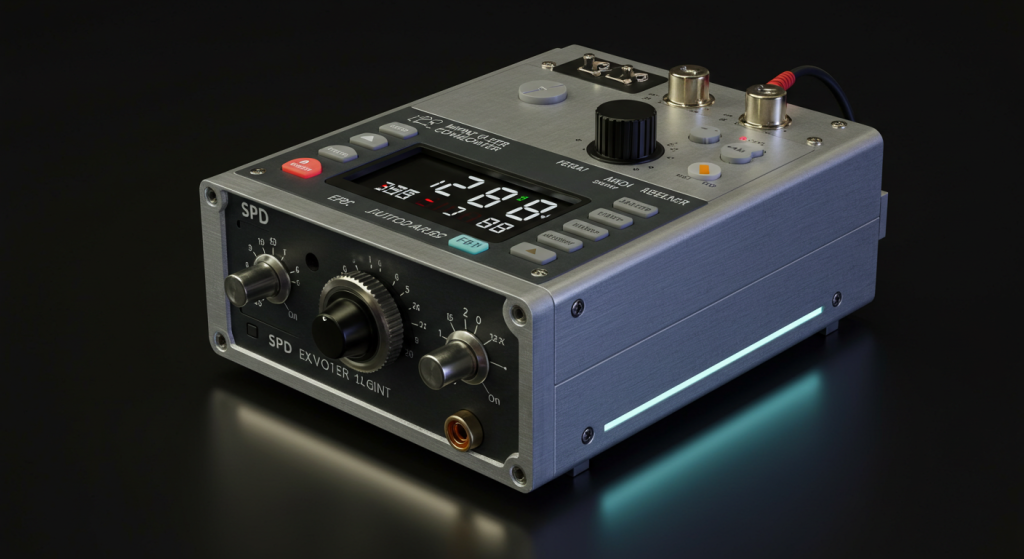
What Does an Impulse Counter SPD Function?
An Impulse Counter SPD is an extremely high technology surge protection device that protects electrical systems and, at the same time, gives a constant examination of a surge event in real-time. Its functionality is a combination of detection, suppression, and logging that supports not only safety but also data-supported knowledge.
- Voltage Surge Protection: The SPD is constantly aware of any current electrical system, detecting voltage surges as they arise. This provides high-speed sensing of lightning, switching actions, or any other electrical transients.
- Impulse Counting: The occurrences of the surge are counted by the on-board impulse counter. Such logs can display comprehensive data regarding the volume, frequency, and regularity of surges and help any engineer to monitor the well-being of their systems and any associated repair requirements.
- Overvoltage Suppression: When a surge is noticed, the device diverts the additional current harmlessly to the ground. This guards delicate equipment, eliminating the chances of damage and risk of downtime in industries, commercial, and renewable power applications.
- Multi-Stage Home: The SPD employs a mix of varistors, gas discharge tubes (GDTs), and thermal fuses. This multiple-layer architecture guarantees good power withstand capability, quick response cycle, and protection in a repetitive surge situation.
- Remote Monitoring Capability: With the more advanced models, it is now possible to connect them to building management systems or even SCADA networks and receive real-time alerts and true or false status updates. This helps in proactive maintenance and constant monitoring of key electrical infrastructures.
Installation Guidelines
1. Connect SPD on the close guard equipment (inverter, transformer, or distribution board).
2. A connection between both the phase and the neutral and ground line.
3. Short thick conductors should be used to minimize voltage drop.
4. Make certain of proper polarity and grounding.
5. Install in ventilated areas that are dry to extend its life.
6. The impulse logging is performed on remote monitoring terminals.
The Advantages of Impulse Counter Dod SPDs
- High Equipment Life: Increases the life span of equipment and reduces wear during surge events.
- Avoids Downtime: Detects and protects voltage-related Veto cuts.
- Data-Driven Decisions: It can be used to foretell when to replace something or when something should be maintained.
The Selection of an Impulse Counter SPD
The selection of the most suitable Impulse Counter SPD, where required, is significant in providing effective protection, good reliability of the electrical systems over time. Properly selected SPD will protect delicate equipment, reduce lost time, and give data on surge activity to aid in future maintenance planning.
- Maximum Surge Current Capacity: Test the ability of the SPD to absorb high-energy surges. Devices are rated in kiloamperes (kA), and selecting one that is large enough will supply your equipment with protection in case it gets a severe voltage spike.
- Surge Event Logging: Take into account how many surge events the SPD is capable of recording. A greater logging capacity can lead to detailed monitoring that can spot crossing problems and will enable predictive restoration and cut losses to sudden breakdowns.
- C- Standards Compliance: Achieve standards compliance, such as the safety and performance standards of IEC 61643 and UL certification of the SPD. Compliance means reliability, safety, and interoperability with other electrical assets.
- Installation Environment: Determine whether the SPD will be installed in an indoor or outdoor environment and look at environmental conditions such as temperature, humidity, and dust. The use of PIP-rated and rugged designs provides the correct operation even under the conditions.
- Remote Monitoring and Integration: The advanced counter SPDs can be connected to building management systems (BMS) / SCADA networks. This functionality also allows real-time alarming, status monitoring, and the ability to integrate into factory-wide monitoring.
Monitoring and Maintenance
Adequate maintenance and conditioning are critical factors to maintain proper surge protection and impulse counter discharge reading accuracy of an Impulse Counter SPD over a long period of time. Focused maintenance ensures that the equipment is not damaged, that the system's lifespan can be increased, and that the level of efficiency is maintained.
- Periodic Verification: Review the SPD status indicators and impulse counter logs frequently. This will enable you to know when the device is in a surge and the early onset of wear, or even check whether devices are working as desired.
- Grounding Verification: Grounding should be done in a secure and low-resistance manner in order to have good surge suppression. Verify grounding connections periodically to be sure that the SPD can direct damaging overvoltage currents to the ground without being overloaded.
- Replace Modules When Required: SPD modules can degrade over time as a result of repeated surges. Defective or damaged modules are to be replaced as soon as possible to ensure the overvoltage surge protection does not lose counter protection ability anymore, and the equipment also remains safe.
- Use Remote Monitoring: For commercial or industrial protection, make sure the SPD is integrated with the SCADA or Building Management Systems (BMS). The concept of remote monitoring offers real-time notification, surge records, and can also perform proactive maintenance to minimize downtime at the lowest cost and prevent damage to any such crucial electrical apparatus.
Conclusion
The Impulse Counter SPD does not simply play the role of a surge protector. It is a combination of high energy absorption and multi-stage protection, and real-time impulse protection of critical electrical systems. Ideal for industrial, commercial, and renewable energy, it prolongs the life of equipment, guarantees operational reliability, and can help offer valuable data on surge occurrence. The installation of a safety-oriented impulse SPD is a wise money-saving move in terms of safety and regulatory compliance. Visit Telebahn.
